
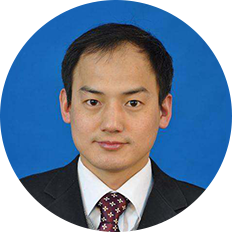
 | Prof. Mouquan ShenNanjing Tech University Mouquan Shen is Professor and PhD supervisor in the College of Electrical Engineering and Control Science, Nanjing Tech University, and Director of the Professor Committee. He completed postdoctoral research at Southeast University and was a visiting scholar at the University of Adelaide, Australia. He is listed among the World’s Top 2% Scientists (2024, 2025). His research interests include iterative learning control, event-triggered control, data-driven control, fault diagnosis and fault-tolerant control, and multi-agent coordination. He has presided over more than ten provincial and national research projects including NSFC. He has published over 100 SCI papers including multiple ESI highly cited and hot papers in journals such as IEEE TAC. He serves as associate editor/editorial board member for several international journals and is a peer reviewer for NSFC. |
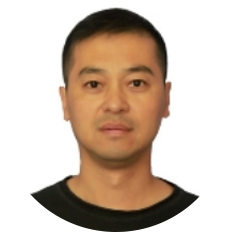 | Prof. Wei SunWenzhou University of Technology Wei Sun holds a Doctor of Engineering degree. He is Professor and Master Supervisor, Senior Engineer at the School of Robotics Engineering, Wenzhou University of Technology. He conducted postdoctoral research at the Institute of Metal Research, CAS, and visiting research at Imperial College London. With over 20 years of R&D and industrialization experience in advanced engineering materials, his research focuses on high-performance alloys, MEMS micro-sensors and precision manufacturing. As a provincial appointed Technology Vice-Chief, he leads multiple industrial projects and realized commercialization of micro vibration sensors. He is Class D Talent of Wenzhou City. He has published more than 20 papers and obtained several invention patents. |
 | Prof. Xueye ChenLudong University Xueye Chen, Ph.D., is a Professor (Level II) and graduate supervisor, a Young Expert of the Taishan Scholars Program, and an Outstanding Graduate Supervisor of Shandong Province. He has also been selected for the Liaoning Provincial Young Top Talent Program, the Xingliao Talent Program, and the Liaoning Bai-Qian-Wan Talents Program, and has received honors including Outstanding Science and Technology Worker of Liaoning Province and Outstanding Master's Thesis Supervisor of Liaoning Province. He has been a visiting scholar at Nanyang Technological University, Singapore, and The Hong Kong Polytechnic University. His research interests include flexible sensing, microfluidics, and functional surfaces. He has led more than 20 research projects, including projects funded by the National Natural Science Foundation of China, the Natural Science Foundation of Shandong Province, major talent programs of Shandong Province, and the Liaoning Provincial Young Top Talent Fund. As first or corresponding author, he has published 209 SCI-indexed papers, with a cumulative impact factor of 1,438 and a highest single-paper impact factor of 42.9, including 72 Q1 papers and 16 ESI Highly Cited Papers. His publications have received more than 4,700 citations, with an H-index of 36. As the first patentee, he has been granted 38 patents and 6 software copyrights, and has participated in drafting 2 standards. As the first awardee, he has received 8 provincial-level awards, including the Second Prize of the Shandong Natural Science Award, the Third Prize of the Liaoning Natural Science Award, and the Liaoning Natural Science Academic Achievement Award, among which 3 were first prizes; he has also received 3 international academic awards. He was twice listed among the ScholarGPS Top 0.05% Scholars in 2022 and 2024, was selected for the World's Top 2% Scientists list released by Stanford University and Elsevier for six consecutive years from 2020 to 2025, and was included in the 2026 Global Top 100,000 Scientists Academic Competitiveness Ranking. |
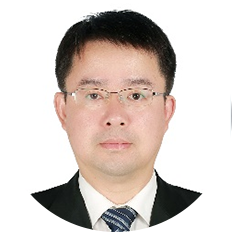 | Prof. Haoping WangNanjing University of Science and Technology Haoping Wang is currently IEEE Senior member, Professor and Ph.D Supervisor at Automation School, Nanjing University of Science and Technology (NJUST), China. He received Ph.D. degree in Automatic Control and Computer Science from Lille University of Science and Technology (LUST), France. His research interests include the theory and applications of hybrid systems, data driven model free adaptive control, state observation design, visual servo control, renewable energy systems optimal control and rehabilitation and augmented exoskeletons design and intelligent control, etc. He was/is the Principal Investigators and coordinators of Chinese National key R & D projects of national international science and technology cooperation Project, National Science Foundation of China Projects, Chinese-French project of Cai Yuanpei, etc. He has published over 300 refereed international journal and conference papers, in which 172 SCI journal papers, authored 2 books, 15 patents, and co-author 5 chapters in books. Prof. Wang is the editor of SCIE journal IJAMCS, and served as the General Chair of ICRCV2026-2023, Publication Chair of ICCAD2024, Co-chair of the ICRCV2021, Co-Chair of Program Committee of the 27th IEEE Int. Conf. on Robot and Human Interactive Communication (ROMAN’2018), and participation to more than 30 conference organization. He was selected as World's Top 2% Scientists, based on Stanford and Elsevier Data, from 2023, and enlisted also in ‘Jiangsu Provincial 333 High-Level Talent Training Program’, ‘Jiangsu Provincial Project Blue: Young Academic Leader’, ‘Six Talent Peaks of High Level Talents’, etc. Prof. Wang is currently Dean of Zhizhi Academy of NJUST, Executive deputy Director of the Sino-French International Joint Laboratory of Automatic Control and Signal Processing, Deputy Director of the Jiangsu Enterprise Development Engineering Association, and Deputy Director of the Rehabilitation Medicine Engineering and Transformation Committee of the Jiangsu Rehabilitation Medicine Association, member of Chinese Association of Automation (CAA), Committee member of Data Driven Control Learning and Optimization Professional Committee (DDCLS-CAA), and the Committee member of the energy Internet Committee –CAA, etc. |